

Industry Insights
What Nobody Tells You About Scaling a Beauty Brand
From Rhode’s sensory marketing strategy to the economics of customer acquisition, here’s what it really takes to build a beauty business.
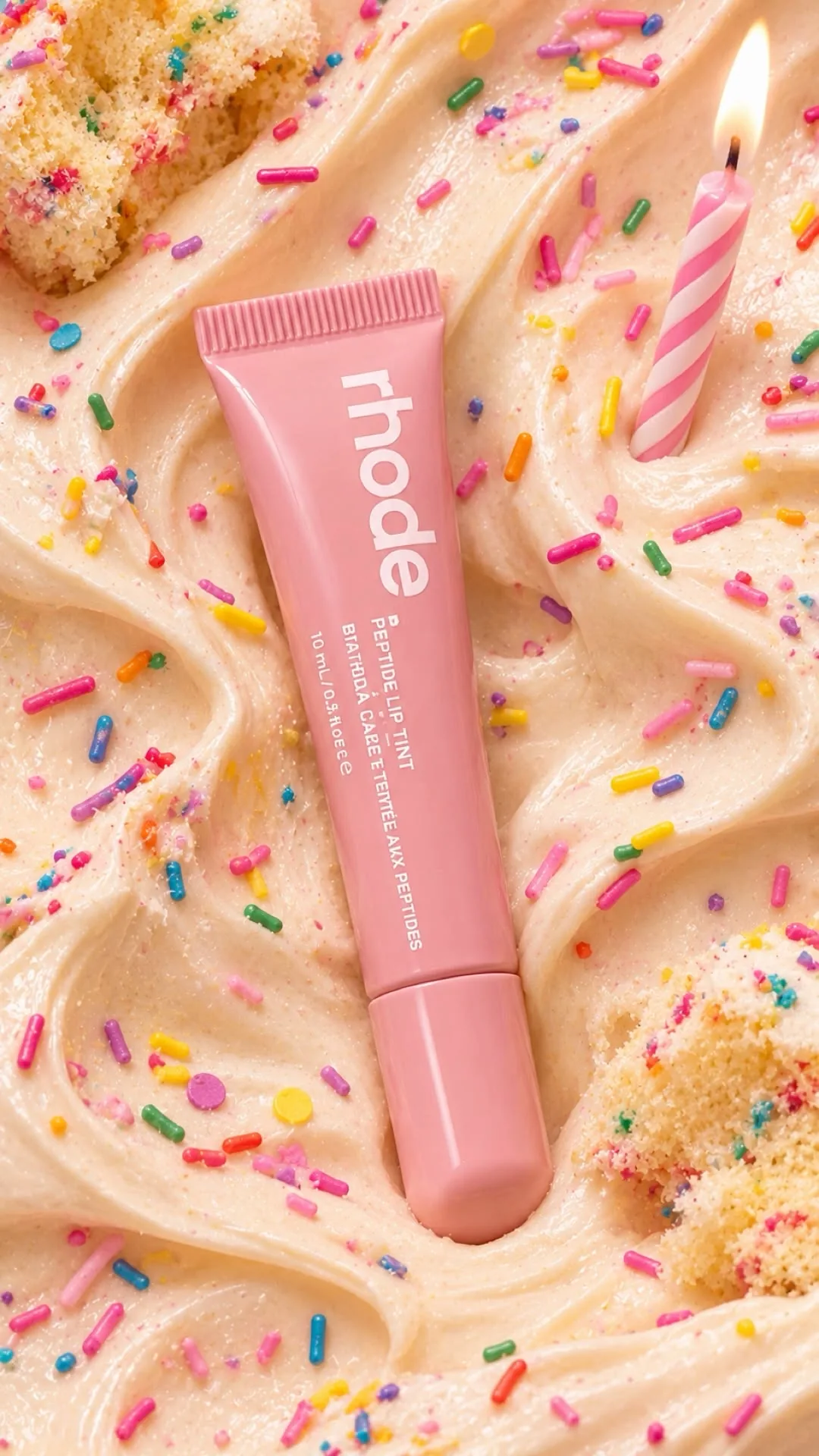
Rhode doesn’t just sell lip treatments. It makes you crave them.
A lip tint nestled into birthday cake frosting. Raspberry-coloured packaging balanced on frozen berries. Glossy lips photographed alongside melting ice.
None of these creative concepts are particularly concerned with explaining the technical formulation of a beauty product. Instead, they make you imagine what the product might feel like before you’ve even touched it.
That’s sensory marketing. And it’s one of the most interesting elements of Rhode’s skincare marketing strategy.
But behind the beautifully executed campaigns, recognisable packaging and cultural relevance lies a much bigger conversation about what it actually takes to scale a beauty brand.
Because generating desire and building a commercially sustainable business are two very different challenges.
At Solar Digital Projects, our experience across skincare ecommerce, beauty businesses and aesthetic clinics has taught us that the most effective growth strategies connect creative desirability with commercial intelligence.
Rhode and the art of making customers crave a product
One of the biggest challenges in beauty ecommerce is that customers cannot physically experience a product before purchasing it.
They cannot feel its texture, smell its fragrance or experience how it applies to their skin.
Sensory marketing helps bridge that gap.
By using familiar textures, colours, sounds and visual associations, brands can encourage customers to imagine a sensory experience through a digital screen.
Rhode’s skincare marketing strategy illustrates this particularly well.
Its food-inspired visual language draws on associations with sweetness, indulgence, softness, freshness and familiarity.
Even its product naming contributes to that experience. Raspberry Jelly, Glazing Milk and Barrier Butter communicate more than a product category. They help create an expectation around the experience of using the product.
The lesson for emerging beauty brands isn’t to start photographing every product alongside food.
It’s to understand what you want your customers to feel.


Sensory marketing is a strategy, not an aesthetic
There is a difference between following a creative trend and developing a recognisable sensory identity.
A skincare brand focused on simplicity might communicate through clean compositions, flowing water and lightweight textures.
A luxury beauty brand might use rich materials, dramatic lighting and slow, deliberate movement.
A playful cosmetics brand might explore bold colour, unexpected product styling and culturally relevant visual references.
The creative direction should originate from the brand’s positioning and customer motivations, rather than simply replicating whatever is performing well on social media.
When developing sensory marketing campaigns, consider:
- What emotional response should our creative generate?
- Which textures, colours and movements represent our product experience?
- What familiar sensory associations could help customers understand our product?
- How can these creative concepts extend across paid advertising, social media, email and our ecommerce experience?
- Which concepts generate measurable commercial outcomes?
The objective is not simply to produce beautiful imagery. It is to create a distinctive visual language that builds recognition, communicates value and supports customer acquisition.
The difference between building hype and building a business
Rhode offers valuable lessons in brand desirability, but emerging beauty businesses should recognise that its founder visibility, resources and market positioning are not easily replicated.
What can be replicated is the strategic thinking behind its creative.
Building anticipation. Developing recognisable visual codes. Making products desirable beyond their functional benefits. Creating campaigns that invite customers into a wider brand experience.

Part of the appeal of contemporary beauty marketing is the ability to position products within a customer’s lifestyle rather than presenting them as isolated objects.
A lip treatment becomes something that belongs on a desk, in a handbag, next to a phone or within someone’s everyday routine.
This creates opportunities for a brand to become part of a broader cultural identity.
However, attention is only one component of growth.
A viral campaign doesn’t automatically create profitable customer acquisition. An impressive advertising ROAS doesn’t necessarily indicate a healthy contribution margin. And a successful product launch doesn’t guarantee repeat purchases.
This is where creative performance marketing becomes particularly important.
The challenge isn’t simply generating demand. It’s building the commercial infrastructure to convert that demand into sustainable growth.
Your beautiful branding isn’t the whole strategy
Beauty is an inherently visual industry. Strong art direction, packaging and brand identity are valuable assets.
But when it comes to performance marketing for beauty brands, aesthetics alone cannot carry the entire customer acquisition strategy.
Customers need reasons to take action.
They may want to understand what differentiates a skincare product, how it fits into their existing routine, what ingredients it contains or why its price is justified.
They may need information about a service, practitioner qualifications, consultation processes or what to expect from an appointment.
A beautiful advertisement might capture someone’s attention. The message behind that advertisement determines whether it helps answer the questions influencing their decision.
This is why our creative performance approach focuses on testing different customer motivations rather than simply producing more versions of the same advertisement.
For skincare ecommerce, those motivations could include:
- Ingredient and formulation education.
- Sensory product experiences.
- Product differentiation.
- Application techniques.
- Founder expertise.
- Routine simplicity.
- Customer experiences, where appropriate and permitted.
- Convenience and product value.
- Common purchase objections.
Each creative concept should have a strategic reason for existing.
“Beautiful creative gets attention. Commercially intelligent creative gives that attention a purpose.”
Nobody talks enough about the economics of scaling
One of the most common misconceptions about ecommerce growth is that increasing advertising investment will automatically produce a proportional increase in revenue.
In reality, scaling introduces additional commercial considerations.
You may need to reach less familiar audiences. Your acquisition costs may increase. Your inventory and fulfilment requirements may change.
Promotional discounts may influence average order value or contribution margin.
And creative that worked exceptionally well at one level of spend may become less efficient as its audience expands.
For a skincare business, this is particularly important because the value of acquiring a new customer may extend beyond their first purchase.
A business selling replenishable products has opportunities to generate repeat purchases through product satisfaction, customer education and a thoughtful retention strategy.
But future customer value should be grounded in actual retention data, not simply assumed.
Before increasing your marketing budget, understand the economics behind the growth you are trying to achieve.
The difference between beauty ecommerce and beauty lead generation
Marketing a skincare ecommerce brand is not the same as marketing an aesthetic clinic.
Although the audiences may overlap, the customer journey, commercial objectives and performance measurements are different.
Beauty and skincare ecommerce
Commercial objective: Acquire customers and generate sustainable product sales.
Metrics that matter:
- Customer acquisition cost.
- Average order value.
- Website conversion rate.
- Contribution margin.
- Repeat purchase rate.
- Customer lifetime value.
- New versus returning customer revenue.
Growth opportunities:
Product education, sensory marketing, creative testing, product bundles, Shopify optimisation, Google Shopping, Meta Ads and email marketing automation.
Beauty and aesthetic clinics
Commercial objective: Generate appropriate, qualified enquiries that progress into consultations and suitable appointments.
Metrics that matter:
- Cost per lead.
- Qualified lead percentage.
- Consultation booking rate.
- Appointment attendance rate.
- Consultation conversion rate.
- Actual client acquisition cost.
Growth opportunities:
Informative service content, search advertising, enquiry funnel optimisation, practitioner information, clear website navigation and timely lead follow-up.
Both businesses need effective customer acquisition strategies. But neither should rely exclusively on the cheapest possible acquisition metric.
A $15 lead isn’t necessarily better than a $40 lead
Lead generation performance is frequently evaluated using cost per lead.
But the cost of generating an enquiry is not the same as the cost of acquiring a client.
Consider two hypothetical beauty businesses running lead generation campaigns.
| Metric | Campaign A | Campaign B |
|---|---|---|
| Advertising investment | $3,000 | $3,000 |
| Leads generated | 200 | 75 |
| Cost per lead | $15 | $40 |
| Lead-to-client conversion | 5% | 20% |
| Clients acquired | 10 | 15 |
| Client acquisition cost | $300 | $200 |
These are illustrative examples, not actual client results.
Campaign A generates substantially more leads at a lower cost per lead.
Campaign B acquires more clients and achieves a lower actual client acquisition cost.
This is why beauty clinic marketing needs to connect advertising activity with the subsequent enquiry and booking journey.
Without that visibility, businesses risk optimising campaigns towards the wrong outcomes.
Your website is part of your advertising strategy
An advertisement creates an expectation.
The website experience that follows needs to fulfil that expectation.
For skincare ecommerce, this means clear product information, intuitive navigation, transparent pricing, credible product education and a straightforward purchase process.
It also means maintaining consistency between the sensory experience presented through advertising and the way products are communicated on the website.
For aesthetic clinics, it means informative service pages, accurate practitioner details, appropriate information about consultations and an accessible enquiry process.
When a beauty marketing agency manages advertising without considering the website experience, valuable opportunities can be missed.
A business may be generating relevant traffic but losing prospective customers because of confusing navigation, insufficient information, poor mobile experiences or unnecessary steps in the conversion process.
Increasing the advertising budget will not automatically resolve those issues.
Sometimes the most commercially valuable marketing recommendation has very little to do with increasing spend.
Retention is one of the most underestimated growth opportunities in skincare
Beauty and skincare businesses frequently invest significant resources into acquiring new customers.
But what happens after the first purchase?
A customer who has already discovered your brand, purchased your product and had a positive experience represents a different commercial opportunity from someone encountering your business for the first time.
For skincare ecommerce, customer retention strategies can include:
- Welcome and product education email flows.
- Post-purchase communications.
- Application and routine guidance.
- Appropriate product replenishment reminders.
- Complementary product recommendations.
- Thoughtful customer segmentation.
- Win-back campaigns.
These strategies should be informed by actual product usage patterns and customer behaviour.
Rather than relying on constant discounting, brands can build stronger customer relationships through relevance, education and a consistently positive experience.
An effective beauty marketing strategy should consider customer lifetime value alongside new customer acquisition.
Beauty marketing requires an understanding of compliance
The beauty industry is not a single regulatory category.
Marketing ordinary cosmetic products is different from advertising therapeutic goods, regulated health services or certain cosmetic procedures.
Australian businesses operating in these areas must understand the advertising requirements relevant to their products and services.
For regulated health services, Ahpra’s advertising requirements address misleading representations, testimonials about clinical care, unreasonable expectations and the encouragement of unnecessary services.
Additional rules may apply to cosmetic procedures and therapeutic goods.
This matters when developing advertising copy, creative concepts, website content and social media campaigns.
A strategy that works for a conventional skincare product may not be appropriate for a regulated aesthetic service.
Our experience supporting businesses across these industries has made regulatory awareness an important consideration within the creative planning process.
Businesses should seek appropriate compliance advice where required.
Why a boutique beauty marketing studio can be a better fit
Growing beauty businesses often find themselves between two traditional marketing models.
A large digital marketing agency may offer extensive capabilities and specialist departments.
An internal marketing team may provide exceptional familiarity with the brand and direct access to the wider business.
However, building a complete internal department can be a considerable financial and operational commitment.
Paid media, creative strategy, ecommerce development, analytics, SEO and customer retention all require different areas of expertise.
Employing one marketing generalist and expecting them to deliver every discipline at a specialist level is not always realistic.
Equally, a larger agency structure may not suit a business that values close collaboration, direct communication and frequent strategic involvement.
A boutique creative performance studio offers an alternative operating model.
At Solar Digital Projects, we bring together these complementary disciplines within a commercially focused framework.
Our approach is built around understanding what the business needs, identifying opportunities across the customer journey and maintaining close involvement in the accounts we support.
The objective is not simply to manage a beauty brand’s advertising. It is to understand how marketing contributes to its broader growth strategy.
Before scaling your beauty brand, understand these five numbers
For skincare ecommerce businesses, begin with the following commercial fundamentals.
Average order value
How much revenue does an average transaction generate?
Contribution margin
How much revenue remains after the variable costs included in your margin calculation, before advertising?
Customer acquisition cost
How much are you spending to acquire each new customer?
Repeat purchase rate
What proportion of customers return for another purchase?
Break-even advertising ROAS
What advertising return is required to cover your advertising investment at the contribution level?
A business that understands these numbers is better equipped to evaluate marketing performance and make informed investment decisions.
For beauty clinics, apply the same principle to qualified enquiries, consultation conversion, client acquisition costs and the contribution generated by acquired clients.
What could your beauty business actually achieve?
Scaling a beauty brand is not simply a matter of producing more content or increasing advertising spend.
It requires a clearer understanding of the relationship between creative, customer behaviour, commercial economics and operational capacity.
This is precisely why we developed the Solar Digital Projects Creative Performance Calculator.
For product-based beauty businesses, the calculator allows you to explore potential revenue, advertising investment and return scenarios.
It provides a more commercially informed starting point for conversations about marketing budgets and business growth.
For clinic-based businesses, the same commercial principles can be explored using the economics of qualified lead generation and client acquisition.
The Creative Performance Method
Beauty Meets Commercial Intelligence.
Discover what your next stage of growth could look like. Explore potential returns, model your marketing investment and unlock your Creative Performance Growth Formula.
Calculate Your Growth PotentialAesthetic clinic or service business? Discuss a tailored commercial assessment.Keep thinking.
Commercial Intelligence
How Much Should You Really Be Spending on Marketing?
How much should your business actually invest in marketing? Learn how to reverse-engineer a commercially intelligent budget based on your margins, revenue objectives and growth potential.

Agency Partnerships
What Australia’s Best Agencies Know About Growth
The most successful agencies don’t necessarily do everything themselves. Discover how specialist creative and performance partnerships can help Australian agencies grow without compromising the quality of their work.